
The holistic health and wellness space prides itself on one thing above almost everything else—the willingness to question conventional wisdom. Question the food pyramid. Question the pharmaceutical-first model. Question the idea that chronic disease is genetic destiny. Question whether the system built to keep you healthy is actually keeping you healthy.
I love that about this space. It’s why I’m in it.
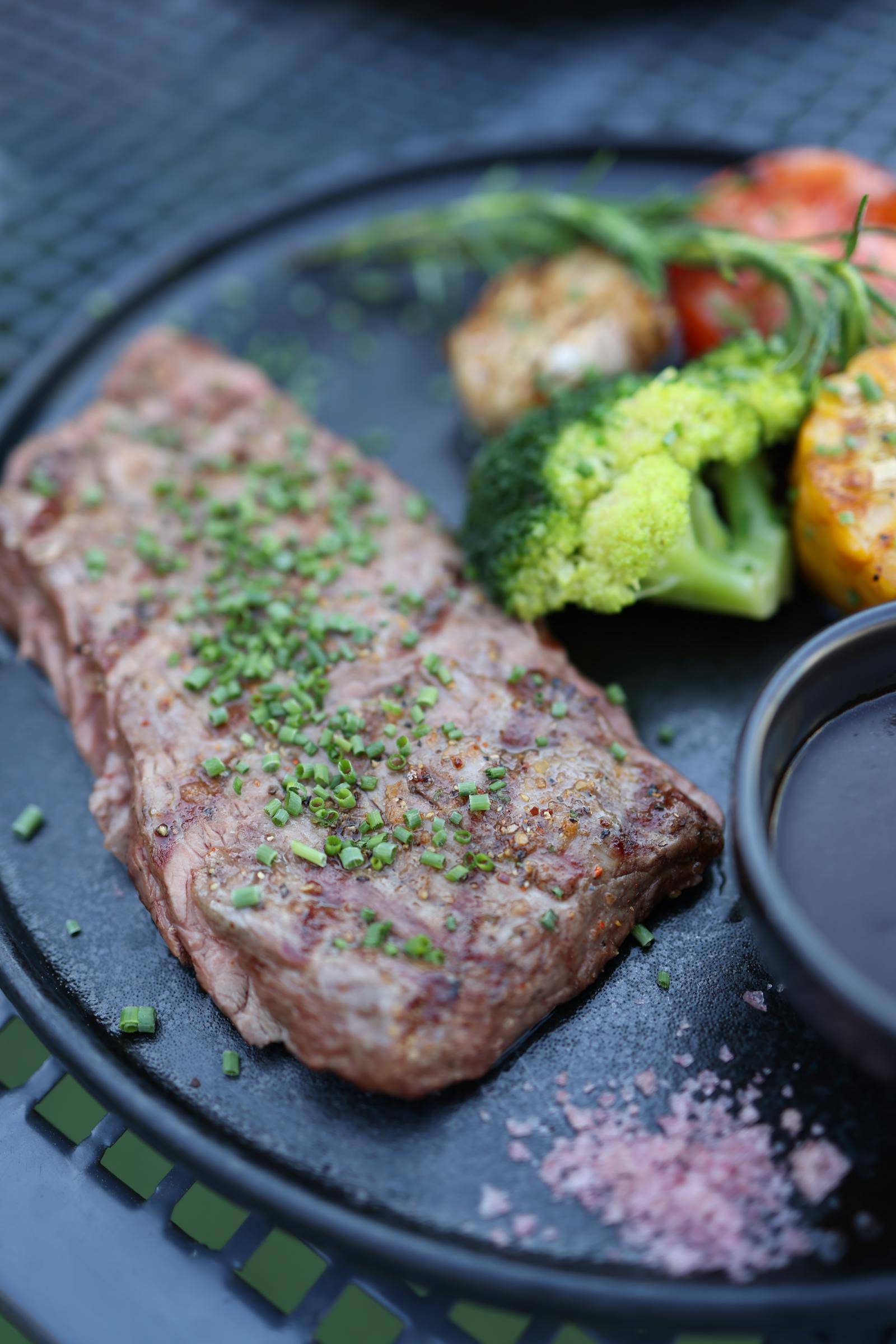
There’s one area, though, where a large portion of the holistic community seems to put the brakes on all that questioning—and it’s red meat. Specifically, keto and carnivore diets. The same practitioners who will passionately challenge mainstream narratives about cholesterol, statins, and seed oils will turn around and parrot the exact same mainstream narrative about animal-based eating being dangerous, unsustainable, or irresponsible. The same crowd that says “do your own research” about everything else suddenly defers to decades-old epidemiology when the topic is a ribeye.
It’s one of the stranger contradictions I’ve observed in this world, and I think it’s worth talking about.
The Plant-Based Default
In my experience, a significant number of holistic coaches and practitioners lean plant-based or vegan—not all, obviously, yet enough that it shapes the culture of the space. Walk through any holistic health conference, scroll through any wellness Instagram feed, and you’ll notice a pattern: green smoothies, adaptogenic mushroom blends, plant protein powders, raw food cleanses. Animal products—especially red meat—tend to be treated as something to minimize, tolerate at best, or eliminate entirely.
This isn’t a criticism of anyone’s personal dietary choice. If someone thrives on a plant-based diet, I’m genuinely happy for them. What I find worth examining is how that personal preference has calcified into professional orthodoxy—where recommending red meat or supporting a carnivore protocol can get you side-eyed at a networking event faster than recommending a parasite cleanse.
What I See in Practice
Here’s where it gets uncomfortable for the narrative: a meaningful percentage of the clients I work with are recovering from long-term vegetarian or vegan diets. I’m not talking about people who tried it for a month. I’m talking about years—sometimes a decade or more—of dedicated plant-based eating that they believed was the healthiest possible choice. They come to me with tanked energy, hormonal disruption, digestive issues that won’t resolve, brain fog, anxiety, depression, nutrient deficiencies that supplementation alone couldn’t fix, and autoimmune conditions that developed or worsened during their plant-based years.
This isn’t a fringe observation. Other practitioners in the keto and carnivore space see it constantly; it’s one of the most common client profiles in ancestral health coaching. The pattern is consistent enough that dismissing it as anecdotal feels intellectually dishonest—especially from a community that values lived experience and clinical observation alongside (and sometimes above) randomized controlled trials.
I want to be clear: I’m not saying plant-based diets cause all of these problems in every person. People are complex, health is complex, and there are a thousand factors at play. What I am saying is that the blanket assumption that plant-based eating is inherently superior—and that animal-based eating is inherently dangerous—doesn’t hold up against what I see week in and week out.
The Evidence They’re Not Looking At
The research landscape around keto and carnivore diets has shifted dramatically in the last several years, and it keeps shifting. We’re seeing published data on improvements in metabolic markers, inflammatory markers, insulin sensitivity, body composition, mental health outcomes, and autoimmune symptom reduction in people eating animal-based, low-carb, and carnivore diets. The clinical anecdotes number in the thousands—and while I know “anecdote” is treated like a dirty word in some circles, when thousands of people independently report the same improvements under the same dietary framework, that pattern deserves more than a dismissive hand wave.
From what I’ve seen in the literature and in practice, the case against red meat is built largely on epidemiological associations—the kind of research that can show correlation yet cannot establish causation, and that often fails to control for the constellation of lifestyle factors (processed food intake, smoking, alcohol, activity level, socioeconomic status) that actually drive the outcomes being measured. The holistic space knows how to critique weak research methodology when it comes to pharmaceutical studies; I’d love to see that same critical lens applied to nutritional epidemiology.
Meanwhile, the metabolic health clinics—places like Revero, where I’ve had the privilege of working—are generating real-world clinical data on thousands of patients eating animal-based diets, with biomarker tracking and symptom resolution that paint a very different picture than “red meat will kill you.” The results aren’t subtle. They’re often dramatic. And they’re reproducible.
Why Does This Happen?
This is the part where I try not to be reductive, because the reasons are layered—and I think most of them come from a good place.
For many holistic practitioners, the plant-based lean isn’t purely nutritional; it’s ethical, environmental, and spiritual. Those are deeply personal convictions, and I respect them. The problem arises when ethical beliefs about animal welfare or environmental impact get conflated with nutritional claims about human health—when “I don’t eat meat because I believe it’s wrong” becomes “you shouldn’t eat meat because it’s bad for you.” Those are two fundamentally different statements, and blurring the line between them does a disservice to clients who need accurate nutritional guidance.
There’s also a social element. The holistic wellness space has its own culture, its own in-group signaling, its own unspoken rules about what’s acceptable to recommend. In some circles, suggesting that someone eat more red meat carries the same social risk as a conventional doctor suggesting that someone try acupuncture—it marks you as an outsider. Nobody wants to be the weird one at the retreat. That’s a very human pressure, and I don’t think most people are even conscious of it.
I also think there’s genuine information lag. The conventional narrative about red meat being dangerous was so thoroughly embedded—in medical training, in government guidelines, in media—that even people who’ve rejected the conventional model on every other front still carry this particular belief because they absorbed it before they started questioning. It’s the last domino to fall, and for some people, it never falls.
The Shared Origin
Here’s what keeps me from being frustrated about this: every single person in the holistic health space—plant-based, keto, carnivore, somewhere in between—got into this work because they wanted to help people. That’s the common thread. The naturopath who recommends green juice and the carnivore coach who recommends beef and organs both started from the same impulse: “The conventional system failed someone I care about, and I want to do better.”
I think about that a lot. It’s easy to get tribal about dietary philosophy, to draw lines and pick sides and talk past each other. It’s harder—and more honest—to acknowledge that the person on the other side of the debate shares your origin story, even if they arrived at a different conclusion.
Where I push back is when that conclusion isn’t being regularly re-examined. “Question everything” has to mean everything—including your own assumptions. Especially the ones that feel the most settled.
What This Means for Clients
The person who suffers most from this blind spot isn’t the practitioner; it’s the client. The person who’s been eating plant-based for seven years and keeps getting sicker, who goes to their holistic practitioner expecting a fresh perspective, and instead gets the same plant-based reinforcement they’ve been getting from the conventional world. The person who brings up keto or carnivore and gets met with concern, skepticism, or outright discouragement—not because of anything specific to their case, yet because the practitioner has an unexamined bias against animal-based eating.
I’ve sat across from those clients. They’re confused, they’re exhausted, and they feel like they’ve tried everything. In many cases, what they haven’t tried is the thing their entire wellness ecosystem has been warning them away from.
The Invitation
I’m not asking anyone to become a carnivore coach. I’m not even asking anyone to change their personal diet. What I am asking—what I think the holistic space owes itself—is intellectual consistency. If you’ve built your practice on questioning the establishment, question all of it. Read the metabolic literature. Look at the clinical data coming out of keto and carnivore-focused practices. Talk to the practitioners who are doing this work and seeing the results firsthand. Sit with the possibility that this particular piece of conventional wisdom might be just as flawed as all the others you’ve already rejected.
The evidence is growing. The clinical experiences are piling up. The anecdotes—thousands of them—are remarkably consistent. At some point, “I just don’t think meat is healthy” stops being a position and starts being a refusal to look.
I could be wrong about some of this. I’m always open to that. What I’ve seen in my practice and in the data has led me here, and I’ll keep following where the evidence leads. I hope the broader holistic community does the same—because when we stop questioning, we become the very thing we set out to challenge.
As always, I hope these observations spark some reflection, and maybe even a conversation or two. The people we serve deserve practitioners who are willing to follow the evidence wherever it goes—even when it goes somewhere uncomfortable.
Rance Edwards is a National Board Certified Health and Wellness Coach (NBC-HWC) with over 2,000 clinical hours of experience, specializing in chronic disease management and lifestyle medicine.
If you’re navigating a dietary transition—or wondering if the approach you’ve been on is actually serving you—I’d love to help you think through it. No agenda, no pressure to change anything you’re not ready to change. Schedule a free discovery call →
Photo by Valeria Boltneva on Pexels