
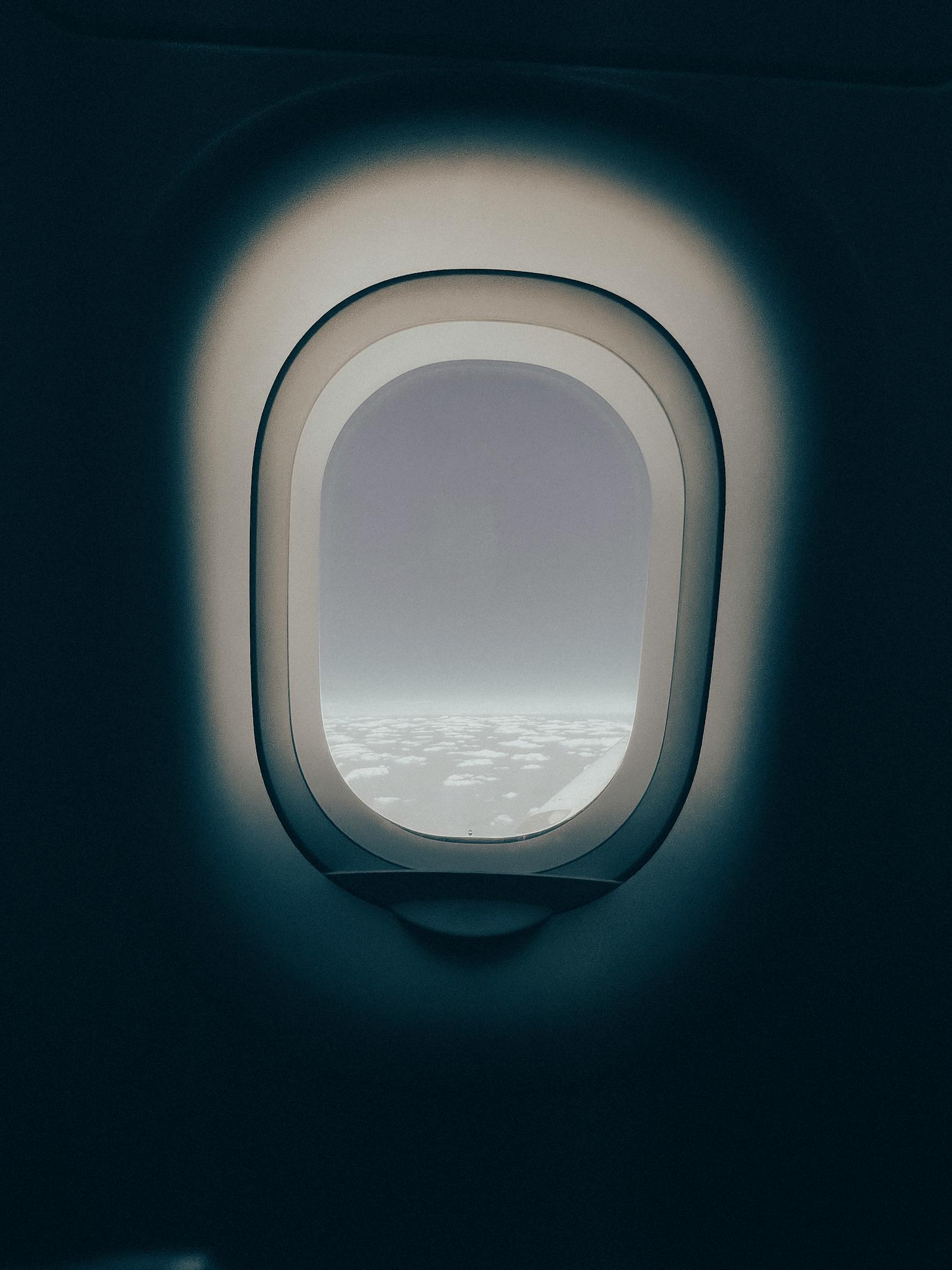
Thinner air, dry cabins, a scrambled clock—and the cheap habits that blunt most of it
Flying is genuinely one of the more remarkable things we do, and we’ve gotten so used to it that we forget what’s actually happening: you’re sitting in a sealed aluminum tube seven miles up, breathing thinner air than you’d find on most mountains, taking on a little more cosmic radiation than usual, holding nearly still for hours, and—if you’ve crossed a few time zones—handing your internal clock a puzzle it didn’t ask for.
None of that is a reason to stop flying. I fly plenty these days, and I’m not here to make anyone nervous about their next trip; fear isn’t useful and it isn’t the point. A handful of these effects are real, though, and most of them are surprisingly cheap to offset once you know they’re there.
The air is thinner than you think
Airliner cabins aren’t pressurized to sea level; they’re usually held around the equivalent of 6,000 to 8,000 feet of altitude. That’s enough that your blood oxygen drops a few points—studies measuring ordinary passengers found average oxygen saturation falling from about 97% on the ground to roughly 93% at cruising altitude, with more than half of people dipping to 94% or below.
For a healthy person, that’s a non-event your body shrugs off. For someone with heart or lung disease, significant anemia, or bad sleep apnea, that same dip can actually matter—worth a conversation with your doctor about supplemental oxygen before a long flight. For everyone else, the offsets are simple: move around when you can, breathe like you mean it, and go easy on the alcohol, which only deepens the dip.
It’s the driest air you’ll breathe all year
Cabin humidity is brutally low—often drier than a desert. That pulls moisture out of you steadily for the whole flight, and dehydration quietly amplifies almost everything else on this list: the fatigue, the headaches, the sluggish circulation.
The fix is the obvious one done deliberately: hydrate, and hydrate with electrolytes rather than plain water alone—a little extra salt goes a long way at altitude. Limit the alcohol and the third coffee, both of which pull water the wrong direction.
Sitting still is the underrated one
This is the one with the most actual research behind it. Holding still for hours lets blood pool in your legs, which raises the risk of a clot—venous thromboembolism.
Here’s the honest size of it: for most people, a clot after a flight is genuinely rare. The risk climbs on flights longer than about six hours and in people who already carry risk factors—recent surgery, a history of clots, pregnancy, certain medications, obesity. The countermeasures are refreshingly low-tech and they’re the same for everyone: get up and walk the aisle periodically, flex your calves while you’re seated, and keep hydrating. For long flights or higher-risk travelers, graduated compression socks genuinely help; interestingly, aspirin didn’t hold up in the research, so don’t rely on it. If you know you’re high-risk, make a plan with your doctor before you fly.
The radiation nobody mentions
Up at altitude you’re shielded by less atmosphere, so you take on more cosmic radiation than you do on the ground. For aircrew and the truly frequent flyer, that accumulates into meaningfully more exposure than the rest of us get, and studies have noted some elevated cancer rates in flight crews—though a clean causal line hasn’t been drawn, and there are a lot of tangled variables in that work.
For the occasional traveler, the dose from any single flight is small—a minor fraction of the background radiation you absorb over a normal year just living on Earth. So the honest offset here is mostly reassurance: a few trips a year isn’t worth losing sleep over. This is a “worth knowing” item that matters for career crew and the person living on planes, where the cumulative total is real.
Your clock lands later than you do
Cross a few time zones and your circadian rhythm is suddenly out of sync—your body keeps trying to sleep and eat on the schedule it left behind. That misalignment isn’t just the groggy feeling we call jet lag; it carries a real metabolic cost. When researchers deliberately knock people out of sync with their internal clock, blood sugar and other markers head the wrong way (I dug into that in the insulin-sensitivity post).
The fastest way to re-anchor is light. Get morning sunlight at your destination and avoid bright light at the wrong local hours—I wrote more about why light is the master timing signal. Shift your meals onto destination time as fast as you can; some people find that eating little on the plane and breaking their fast at the first local mealtime helps the clock catch up quicker. Then protect your sleep on the new schedule. The clock will reset on its own eventually; these just speed it along.
What about the germy recycled air?
This one’s better news than its reputation. Cabin air is HEPA-filtered and exchanged frequently, so it’s cleaner than most people assume. The real exposure is the person coughing two rows up and the tray table everyone before you touched.
Basic hand hygiene handles most of that, and beyond it, the same thing that protects you everywhere else applies: keep your terrain resilient so your immune system is ready when it meets something.
All that to say—
Put it together and the picture isn’t scary; it’s just specific. Flying asks your body to handle thin, dry air, a long stretch of stillness, a dose of radiation, and a clock that no longer matches the sun—all at once. The body is remarkably good at absorbing all of that, and you can make its job easier with a few cheap habits: hydrate with electrolytes, move regularly, go easy on the alcohol, and anchor your light and meals to wherever you’ve landed.
These are the same small adjustments I keep coming back to for the modern environment in general—not because the world is out to get you, but because a little awareness turns “why do I always feel wrecked after I fly” into something you actually have some say over.
I hope this makes your next trip land a little softer.
Rance Edwards is a National Board Certified Health and Wellness Coach (NBC-HWC) with over 2,000 clinical hours of experience, specializing in chronic disease management and lifestyle medicine.
If you’re working on feeling steady through a demanding travel schedule—or any of the modern-life stressors that wear people down—I’d love to talk. Book a free discovery call—no pressure, just a conversation about where you are and what the next step might look like.
Sources
- Humphreys, S., et al. (2005). The effect of high altitude commercial air travel on oxygen saturation. Anaesthesia, 60(5), 458–460. DOI
- Philbrick, J.T., et al. (2007). Air travel and venous thromboembolism: a systematic review. Journal of General Internal Medicine, 22(1), 107–114. DOI
- Scheibler, C., et al. (2022). Cancer risks from cosmic radiation exposure in flight: a review. Frontiers in Public Health, 10, 947068. DOI
- Scheer, F.A.J.L., et al. (2009). Adverse metabolic and cardiovascular consequences of circadian misalignment. Proceedings of the National Academy of Sciences, 106(11), 4453–4458. DOI
Photo by eric fotos via Pexels.